 Grain & Gallon
Best iron filters for well water, matched to iron, sulfur and well flow
The best iron filter for well water by iron, manganese, sulfur and pH limits, plus the backwash flow each one needs from your well pump before you buy.
Our picks at a glance
- Best for moderate iron with sulfur
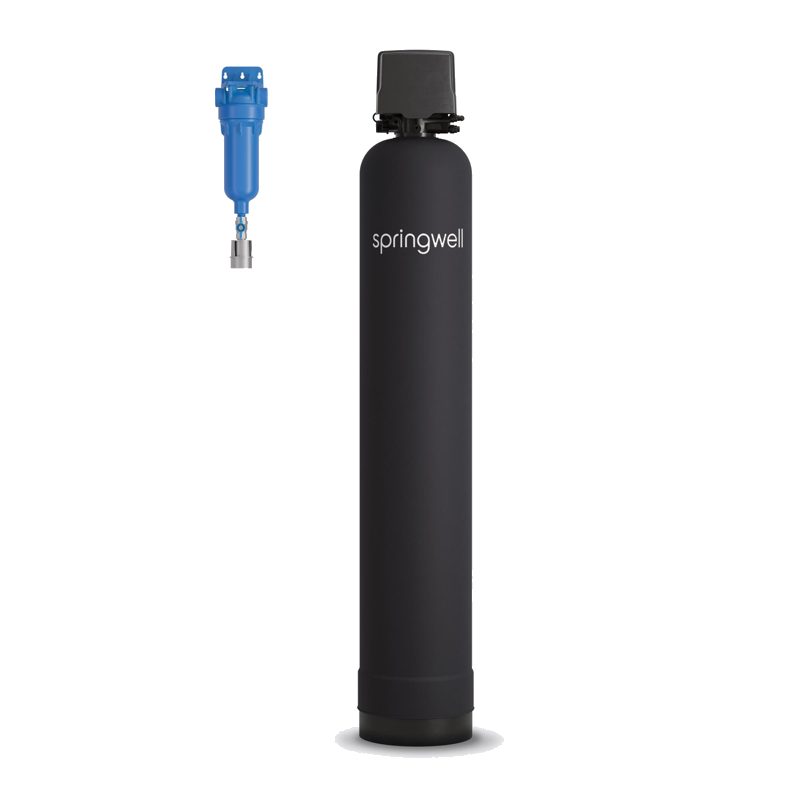
SpringWell WS well water filter
Wells with moderate iron plus a sulfur smell
- Max iron
- 7 ppm
- Max manganese
- 1 ppm
- Max hydrogen sulfide
- 8 ppm
Check price atSpringWell (opens partner site)Opens springwellwater.com - Best for high iron
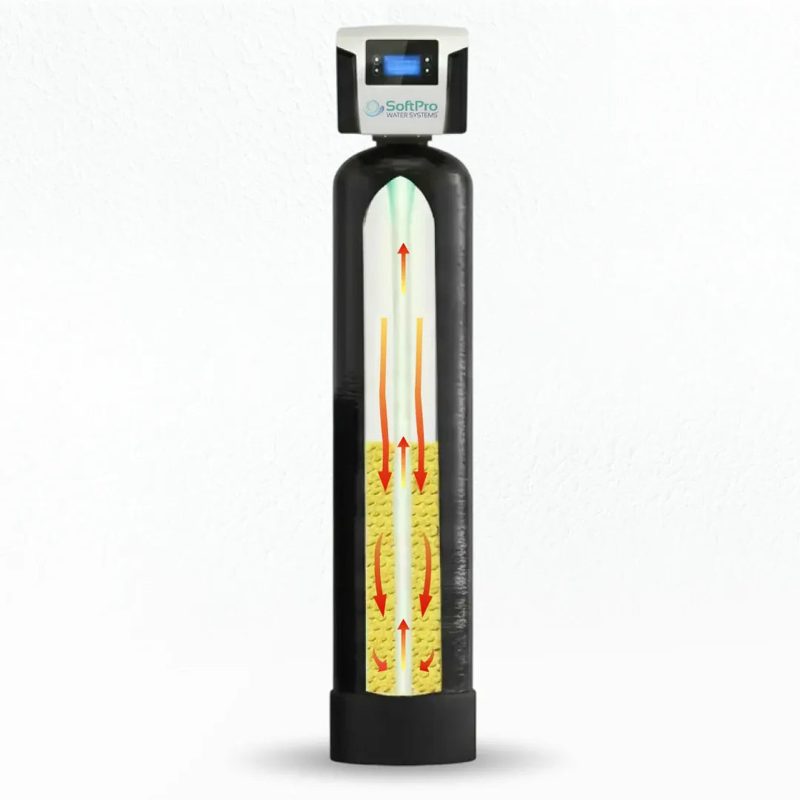
High-iron wells whose pump can meet the backwash minimum
- Max iron
- 30 ppm
- Max manganese
- 7 ppm
- Best published spec sheet for iron plus manganese
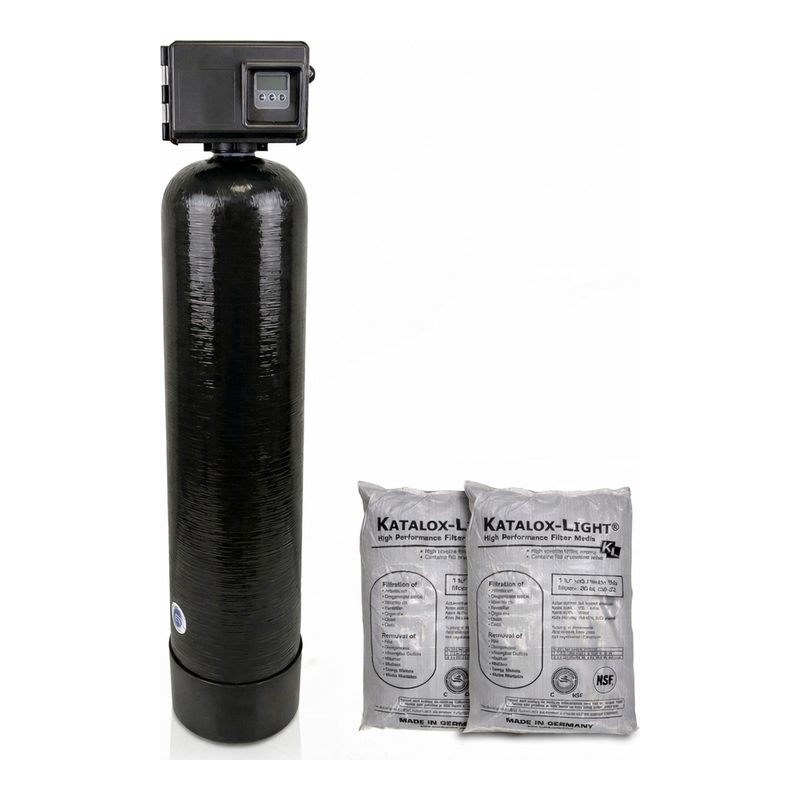
Mid Atlantic Water Fleck 2510AIO Katalox Light iron filter (2.0 ft³)
Wells with high iron plus manganese and a pump that delivers at least 8 gpm
- Max iron
- 30 ppm
- Max manganese
- 15 ppm
- Best for low backwash water use
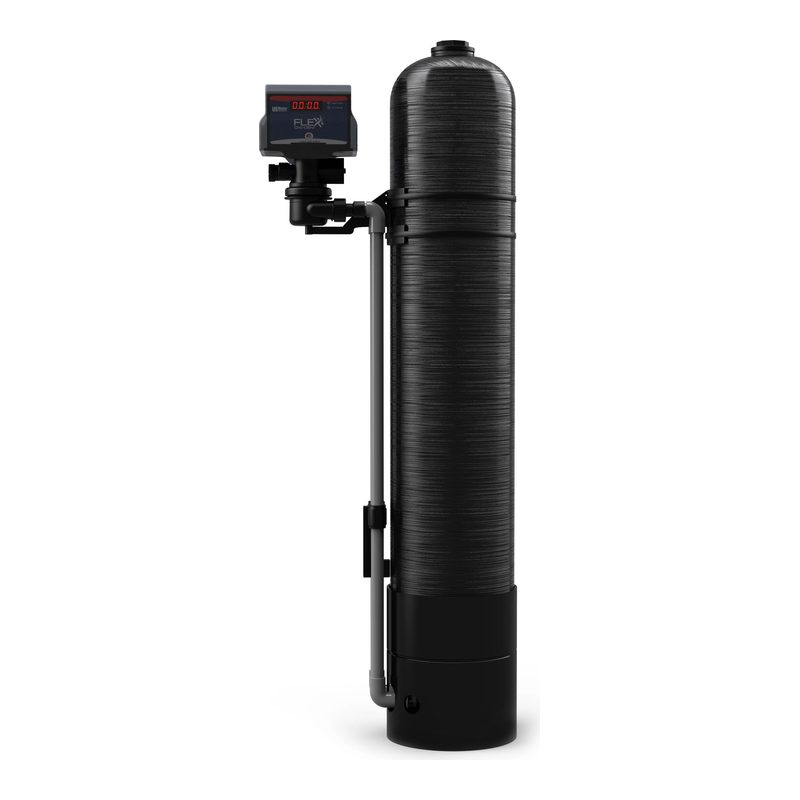
US Water Systems Flexx Oxi-Gen
Moderate iron and sulfur on wells where backwash water or pump flow is limited
- Max iron
- 8 ppm
- Max sulfur
- 6 ppm
- Best for strong sulfur smell
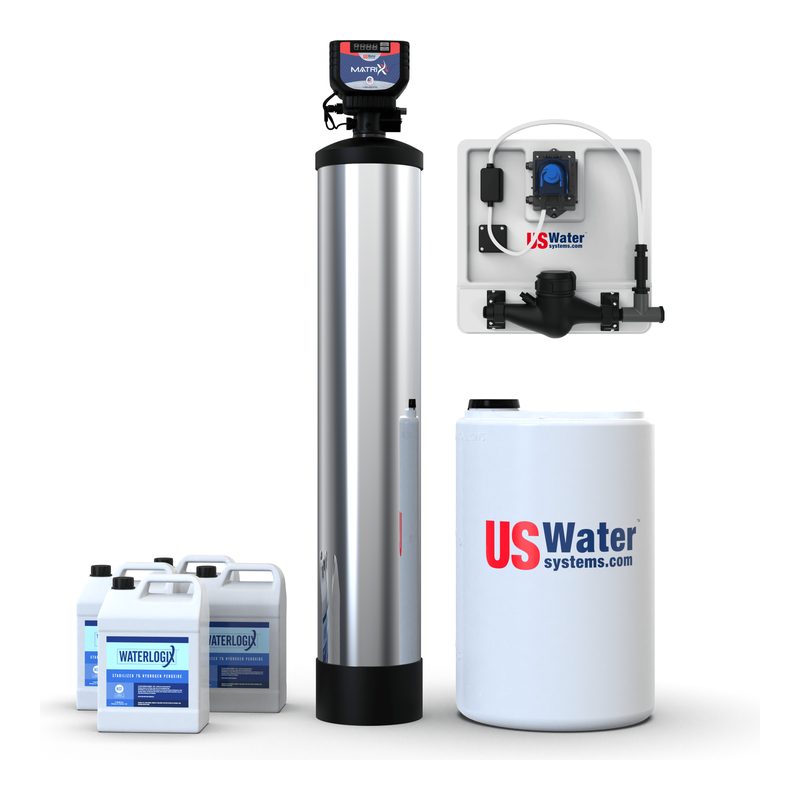
US Water Systems Matrixx InFusion
Strong rotten-egg smell, high hydrogen sulfide or iron bacteria
- Max hydrogen sulfide
- 30 ppm
- Max iron
- 20 ppm
The best iron filter for well water is the one whose published limits cover your test and whose backwash flow your pump can supply. For most wells with iron up to about 7 ppm and a sulfur smell, the SpringWell WS is our pick. For high iron, up to 30 ppm, choose the SoftPro Iron Master or the Mid Atlantic Fleck 2510AIO build, but only if your pump delivers the 5 to 10 gpm they need to backwash. For a strong rotten-egg smell, a hydrogen peroxide system such as the Matrixx InFusion is the better tool.
If you have not tested your water yet, do that first. Our guide to reading your well water test results lists the lines that matter here: iron, manganese, hydrogen sulfide and pH.
How we chose
We compared iron filters on the numbers a well owner has to match, taken from each seller’s product page and checked on 2026-09-27. We haven’t installed any of these systems. This is research from maker and dealer documents, set against guidance from Penn State Extension, and the about page explains the method.
Our criteria, in order:
- Published limits. Maximum iron, manganese and hydrogen sulfide, and a pH range. A filter that publishes these ranks above one that doesn’t, because you can check it against your report before you pay.
- Backwash flow. The flow your pump has to supply for the filter to clean its media bed. Most top pages leave this out, and it is the most common reason an iron filter that matched the test still fails.
- What it takes to run. Air injection needs only power and a drain. Peroxide injection adds a chemical you keep buying.
- Where to buy. A product you can order new online today, with a page that states its limits.
We don’t give star ratings. Without measurements of our own, a score gap between two filters would be invented precision.
Check your well flow before you buy an iron filter
An iron filter cleans itself by backwashing: it runs water up through the media bed and out to a drain, which lifts the bed and flushes out the trapped iron. That needs a minimum flow from the well pump. Too little, and the bed never fully cleans, iron builds up in the media, and iron starts coming through to the house.
Measuring takes five minutes:
- Open an outdoor tap near the pressure tank and let it run until the pump switches on, so you measure the pump and not the stored water in the tank.
- Time how long a 5 gallon bucket takes to fill.
- Divide 5 by the minutes. A bucket filled in 40 seconds (0.67 minutes) means about 7.5 gpm.
Your well log or the pump installer’s report may list a figure too. Compare it with the backwash numbers in the table below, not with the filter’s service flow. The two are different, and the backwash number is the one that decides whether the filter works. Our guide to how iron filters work shows how the media type and tank size set that number.
The best iron filter for well water, by water type
SpringWell WS well water filter
A single-tank air-injection iron filter with published limits for iron, manganese and hydrogen sulfide, and a nightly backwash.
Best for Wells with moderate iron plus a sulfur smell
- Max iron
- 7ppm
- Max manganese
- 1ppm
- Max hydrogen sulfide
- 8ppm
What we like
- Published limits: 7 ppm iron, 1 ppm manganese, 8 ppm hydrogen sulfide
- 12 or 20 gpm flow ratings
- pH range of 6.5 to 10
Watch out for
- Iron limit of 7 ppm is well below the SoftPro Iron Master's 30 ppm
- Manganese limit of 1 ppm is low for wells with high manganese
- Nightly backwash needs 5 to 7 gpm from the well and a drain
All specs
- Sizes
- WS1 (1 to 4 bathrooms), WS4 (4+ bathrooms)
- Flow
- 12 or 20 gpm
- pH range
- 6.5 to 10
- Method
- Air injection, greensand fusion media, single tank
- Backwash flow
- 5 gpm (WS1) or 7 gpm (WS4), per installation manual
- Source
- SpringWell product page; WS1/WS4 installation manual
Photo: SpringWell Water
The SpringWell WS fits a common well profile: some iron, a sulfur smell, and little manganese. Its product page lists 7 ppm iron, 8 ppm hydrogen sulfide and 1 ppm manganese, with a pH range of 6.5 to 10. It is a single-tank air-injection design that backwashes nightly, so there is no chemical to buy.
It suits a household on 1 to 4 bathrooms (WS1) or more (WS4) whose iron sits comfortably under 7 ppm. SpringWell has an affiliate program, as does US Water Systems (picks 4 and 5), while SoftPro and Mid Atlantic don’t. That did not decide the order: the WS ranks first because its limits match the typical well.
The downsides are real. The 1 ppm manganese limit rules it out for wells with black staining from heavy manganese. The product page gives no backwash flow, but SpringWell’s installation manual lists 5 gpm for the WS1 and 7 gpm for the WS4, so check your pump against those.
The page is also inconsistent on flow: the spec table lists 12 gpm for the WS1 and 20 gpm for the WS4, while a size-guide pop-up on the same page says 9 gpm for the Core (WS1) size. And SpringWell now holds well-system orders until you send a water test; its page says the results “confirm whether our system can treat your water before the order moves forward.” That is sensible, but plan for the delay.
SoftPro Iron Master AIO
An iron filter with Katalox Light media, listed for up to 30 ppm iron and 7 ppm manganese, with a published minimum well flow for each size.
Best for High-iron wells whose pump can meet the backwash minimum
- Max iron
- 30ppm
- Max manganese
- 7ppm
- Valve
- 1in
What we like
- Listed for up to 30 ppm iron and 7 ppm manganese
- Publishes the minimum well flow for each size
- Katalox Light media in 1.0, 1.5 and 2.0 ft³ sizes
Watch out for
- Needs 5, 7 or 10 gpm of well flow to backwash, by size
- Claims hydrogen sulfide removal without giving a number
- No affiliate program, so our link to it is a plain link
All specs
- Sizes
- 1.0, 1.5, 2.0 ft³
- Min well flow
- 5, 7 or 10 gpm by size
- Hydrogen sulfide
- Claimed, no limit published
- Media
- Katalox Light
- Source
- SoftPro product page
Photo: SoftPro Water Systems
The SoftPro Iron Master is listed for up to 30 ppm iron and 7 ppm manganese on its product page, about four times the SpringWell’s iron limit and seven times its manganese. It uses air injection with Katalox Light media, so like the SpringWell it runs on air and a backwash, with no chemical.
What sets it apart is that SoftPro publishes the minimum well flow for each size: 5 gpm for 1.0 ft³, 7 gpm for 1.5 ft³ and 10 gpm for 2.0 ft³. That lets you rule a size in or out with your bucket test alone.
It is not for a weak well. A 2.0 ft³ unit on a 6 gpm pump will not backwash properly, and the smaller size may be too small for your household. SoftPro claims hydrogen sulfide removal but gives no number, and the page lists no pH range or service flow. SoftPro has no affiliate program, so our button is a plain link and we earn nothing from it.
Mid Atlantic Water Fleck 2510AIO Katalox Light iron filter (2.0 ft³)
A dealer-built iron filter on a Fleck 2510AIO valve with Katalox Light media, and the most complete spec sheet we found: iron, manganese, sulfur, pH, service flow and the backwash flow your well must supply.
Best for Wells with high iron plus manganese and a pump that delivers at least 8 gpm
- Max iron
- 30ppm
- Max manganese
- 15ppm
- Max sulfur
- 10ppm
- Working flow
- 14gpm
What we like
- Seller lists 30 ppm iron, 15 ppm manganese and 10 ppm sulfur
- Widest pH range of the iron filters we list: 5.6 to 10
- Publishes the minimum backwash flow (8 gpm), so you can check your pump before buying
Watch out for
- Needs at least 8 gpm from the well pump to backwash
- Limits are the seller's own claims; a Canadian dealer lists 10 ppm iron for a similar Fleck and Katalox build
- Needs a 120 V outlet and a drain line
All specs
- Min backwash flow
- 8 gpm (description also says 7 to 8)
- pH range
- 5.6 to 10
- Media
- 2.0 ft³ Katalox Light
- Tank
- 12 x 52 in (12 x 60 in installed)
- Household
- 2 to 3 baths, 3 to 5 people
- Media life (seller estimate)
- 6 to 10 years (page gives 6 to 8, 6 to 10 and 8 to 10)
- Warranty
- 10 years tank, 5 years valve
- Source
- Mid Atlantic Water product page (seller claims)
Photo: Mid Atlantic Water
This is a dealer build from Mid Atlantic Water: a Pentair Fleck 2510AIO (air injection oxidation) valve on a tank of Katalox Light. Its product page gives the fullest spec sheet we found: up to 30 ppm iron, 15 ppm manganese and 10 ppm sulfur, a pH range of 5.6 to 10, 14 gpm of working flow, and a backwash that needs at least 8 gpm from the pump. The 15 ppm manganese limit is the highest on this list, and the pH floor of 5.6 covers acidic wells the others rule out.
Treat those limits as the seller’s own claims. A Canadian dealer, CWTS, sells a similar Fleck 2510AIO and Katalox Light build and lists only 10 ppm iron, with a backwash of 7 to 10 gpm. Same valve, same media, a threefold difference in the headline number. It needs a 120 V outlet and a drain, and has no affiliate program, so the link is plain.
US Water Systems Flexx Oxi-Gen
An air-injection iron and sulfur filter with Katalox and catalytic carbon that, per the seller, recharges its air pocket without a full backwash, and publishes backwash flows of 5 and 7 gpm.
Best for Moderate iron and sulfur on wells where backwash water or pump flow is limited
- Max iron
- 8ppm
- Max sulfur
- 6ppm
- Max manganese
- 0.5ppm
What we like
- Backwash flow of 5 gpm on the smaller size, 7 gpm on the larger
- Recharges air without a full backwash (seller claim), so less backwash water
- Publishes limits for iron, sulfur, manganese and pH
Watch out for
- Manganese limit is only 0.5 ppm
- Not recommended for iron or sulfur reducing bacteria
- pH range of 6 to 9 is narrower than some rivals
All specs
- pH range
- 6 to 9
- Peak flow
- 10 or 20 gpm by size
- Backwash flow
- 5 or 7 gpm by size
- Sizes
- 081-FX-150 (10 x 54 tank, 1 to 2 baths), 081-FX-250 (13 x 54 tank, 3 to 6 baths)
- Media
- Katalox and catalytic carbon
- Source
- US Water Systems product page
Photo: US Water Systems
The Flexx Oxi-Gen from US Water Systems is another air-injection filter, with Katalox and catalytic carbon. Its product page lists up to 8 ppm iron, 6 ppm sulfur and 0.5 ppm manganese, with a pH range of 6 to 9. Note the wording: the maker says “sulfur”, not hydrogen sulfide, so confirm with them that the 6 ppm refers to the H2S figure on your lab report.
Its case rests on backwash. The smaller 081-FX-150 needs 5 gpm to backwash and the larger 081-FX-250 needs 7 gpm, and the seller says it draws fresh air without a full backwash, so it sends less water to the drain than nightly-backwash designs. That matters on a low-yield well or a septic system.
The 0.5 ppm manganese limit is the lowest here. The seller also says it is not recommended for iron or sulfur reducing bacteria, and the pH range is narrower than the SpringWell’s or the Mid Atlantic build’s.
US Water Systems Matrixx InFusion
A hydrogen peroxide injection system with a catalytic carbon tank, rated for the strongest sulfur of any filter we list and, per the seller, for iron and sulfur bacteria too.
Best for Strong rotten-egg smell, high hydrogen sulfide or iron bacteria
- Max hydrogen sulfide
- 30ppm
- Max iron
- 20ppm
- Max manganese
- 1ppm
- Solution tank
- 15gal
What we like
- Hydrogen sulfide up to 30 ppm and iron up to 20 ppm
- Seller says it also works with iron and sulfur reducing bacteria
- Two sizes with published peak and backwash flows
Watch out for
- Ongoing hydrogen peroxide purchases (7% solution per the seller's FAQ)
- More parts than air injection: injection pump and a 15-gallon solution tank
- Manganese limit is only 1 ppm, and it backwashes about every two days
All specs
- pH range
- 6 to 9
- Peak flow
- 10 or 15 gpm by size
- Backwash flow
- 5 or 8 gpm by size
- Sizes
- 081-MIF-150 (10 x 54 tank, 1 to 2 baths), 081-MIF-200 (12 x 52 tank, 2 to 3.5 baths)
- Oxidizer
- Hydrogen peroxide, 7% solution
- Media
- Catalytic carbon
- Source
- US Water Systems product page
Photo: US Water Systems
When the rotten-egg smell is strong, air is often not enough. Penn State’s hydrogen sulfide guide says aeration “is normally not used” above about 2 mg/L and that oxidizing filters handle up to 2 to 3 mg/L, with chemical oxidation above 6 mg/L. The Matrixx InFusion is a chemical system: it injects hydrogen peroxide ahead of a catalytic carbon tank. Its product page lists up to 30 ppm hydrogen sulfide, 20 ppm iron and 1 ppm manganese, pH 6 to 9, and says it also works where iron or sulfur bacteria are present.
The two sizes need 5 gpm (081-MIF-150) or 8 gpm (081-MIF-200) to backwash, and the product page says it backwashes about every two days (the owner’s manual sets every 3 days by default). The cost is ongoing: you keep buying peroxide (a 7% solution, per the seller’s FAQ) for a 15-gallon solution tank, and there is an injection pump to maintain. If your smell is mild, that is more system than you need. Manganese is again capped at 1 ppm.
Published limits side by side
Every figure below is from the seller’s own page, checked on 2026-09-27. “Not published” means we did not find it there.
| Filter | Iron | Manganese | Sulfur or H2S | pH | Service flow | Backwash flow from the well | Oxidizer and media |
|---|---|---|---|---|---|---|---|
| SpringWell WS | 7 ppm | 1 ppm | 8 ppm H2S | 6.5 to 10 | 12 or 20 gpm (a pop-up says 9 for WS1) | 5 or 7 gpm (installation manual) | Air, greensand fusion |
| SoftPro Iron Master | 30 ppm | 7 ppm | Claimed, no number | Not published | Not published | 5, 7 or 10 gpm by size | Air, Katalox Light |
| Mid Atlantic 2510AIO (2.0 ft³) | 30 ppm (seller claim) | 15 ppm | 10 ppm “sulfur” | 5.6 to 10 | 14 gpm | 8 gpm | Air, Katalox Light |
| Flexx Oxi-Gen | 8 ppm | 0.5 ppm | 6 ppm “sulfur” | 6 to 9 | 10 or 20 gpm peak | 5 or 7 gpm by size | Air, Katalox and catalytic carbon |
| Matrixx InFusion | 20 ppm | 1 ppm | 30 ppm H2S | 6 to 9 | 10 or 15 gpm peak | 5 or 8 gpm by size | Hydrogen peroxide, catalytic carbon |
Two things stand out. The makers rate their filters for more sulfur than Penn State expects from the same method: 6 to 10 ppm for air-fed designs, where Penn State puts oxidizing filters at 2 to 3 mg/L. And only four of the five publish every number a well owner needs. When a figure is missing, ask the seller for it in writing before you order.
Which iron filter system should you get?
Start with iron plus manganese, then sulfur, then your pump. Penn State’s iron and manganese guide sets the frame: an oxidizing filter for combined iron and manganese of 3 to 10 mg/L, and oxidation followed by filtration above 10 mg/L. (ppm and mg/L are the same thing.)
| Your well | Get | Check first |
|---|---|---|
| Iron under 7 ppm, manganese under 1 ppm, some sulfur smell | SpringWell WS | Pump gives 5 (WS1) or 7 gpm (WS4) |
| Iron 7 to 30 ppm, manganese up to 7 ppm | SoftPro Iron Master | Pump gives 5, 7 or 10 gpm for your size |
| High iron with manganese above 7 ppm, or pH below 6.5 | Mid Atlantic 2510AIO | Pump gives 8 gpm; seller confirms limits for your test |
| Iron under 8 ppm, manganese under 0.5 ppm, low-yield well or septic | Flexx Oxi-Gen | Lab H2S number against its 6 ppm “sulfur” |
| Strong rotten-egg smell (H2S above about 6 ppm) or iron bacteria | Matrixx InFusion | You’re fine buying peroxide for the life of the system |
| Dissolved iron under 2 to 5 ppm, hard water, no smell | Possibly no filter at all | See iron filter vs water softener |
The last row matters. A water softener handles modest dissolved iron by itself, and the matcher in our iron filter vs water softener guide turns your hardness, iron, manganese, pH and smell into a system type, with the source for each rule. If your smell appears only in hot water, Penn State points to the water heater’s magnesium anode rod; swapping it for an aluminum rod costs far less than any filter here. Our guide to the sulfur smell in well water walks through the other causes.
Most wells with iron are also hard. An iron filter leaves calcium and magnesium in the water, so you may still need a softener after it. Put the filter first, and size the softener on hardness alone with our water softener size calculator. Our picks of the best water softeners for well water cover that second step, and SpringWell vs SoftPro compares two brands that sell both halves as a set.
Are iron filters worth it?
On a well with more iron than a softener should carry, yes: an iron filter protects fixtures, laundry and any softener behind it, and the air-injection types run on nothing but power and backwash water. They’re not worth it when your iron is low and dissolved and your water is hard anyway, because a correctly sized softener already handles that. They also fail when the backwash flow is short, which is why the pump check comes before the purchase. Our iron filter maintenance guide covers the backwash schedule and what to check when a filter stops working.
Read iron filter reviews with the same lens. Before trusting a bad one, check whether the reviewer’s water fit the filter: manganese over its limit, a pump under its backwash minimum, or bacteria it was never rated for will defeat any brand, and the spec sheet would have shown it.
What we left out and why
- Crystal Quest Metal Removal. Its page lists service flow and media but no maximum iron, manganese or hydrogen sulfide, so you can’t check it against a test.
- Matrixx Greensand Plus. US Water Systems also sells a chlorine-fed greensand system, but we did not find its iron limit on the product page.
- WaterBoss 900-IF. The WaterBoss manual we read says it reduces iron, manganese and hydrogen sulfide, but gives no limits for it that we could verify.
- Culligan, Kinetico, EcoWater and RainSoft. Sold through local dealers, with no online product page or spec sheet to check before a sales visit.
- Salt-free conditioners. They are not iron filters, and the ones we checked need iron at or near zero. See whether salt-free softeners work.
More guides on well tests, iron and sulfur are in the well water treatment section.
Questions people ask
Do iron filters remove sulfur smell?
Most of them remove some hydrogen sulfide, but the limits vary a lot. Penn State Extension puts oxidizing filters at up to 2 to 3 mg/L and prefers chlorination above 6 mg/L, while the makers here list 6 to 10 ppm for their air-fed designs and 30 ppm for the peroxide-fed Matrixx InFusion.
Do I need a water softener if I have an iron filter?
Only if your test shows hardness you want gone. An iron filter leaves calcium and magnesium in the water, so hard water stays hard. If you need both, Penn State recommends the filter first and the softener after it.
Do iron filters use salt?
None of the five filters on this list lists salt as a consumable. The air-injection models use air as the oxidizer and backwash with plain water, and the Matrixx InFusion uses a hydrogen peroxide solution. Salt is what a water softener uses to regenerate.
What size iron filter do I need?
Size it on two numbers, your iron (plus manganese and sulfur) against the filter's limits and your pump's flow against its backwash minimum. A filter your pump can't backwash will let iron through however well it matches your test.