Under 1 gpg counts as soft (Penn State, NDSU). You do not need a softener for hardness.
Iron above 0.3 mg/L stains fixtures and laundry. That is EPA's secondary (aesthetic) standard, not a health limit.
Manganese above 0.05 mg/L causes black or brown staining. That is EPA's secondary (aesthetic) standard.
A softener can take this iron: dissolved iron under 5 mg/L with hardness of 3 to 20 gpg and pH above 6.7 (Penn State). Set the iron factor from your manual.
If you don't want to soften, Penn State lists polyphosphate feed for iron under 2 mg/L (it keeps iron from staining but doesn't remove it) and catalytic carbon for iron under 1 mg/L.
Iron plus manganese of 3 to 10 mg/L: Penn State lists an oxidizing filter (greensand, Katalox-type media or air injection). Put it before any softener.
Over 10 mg/L combined: oxidation, such as chlorination, followed by filtration (Penn State). NDSU says over 10 ppm may need a dedicated iron removal system.
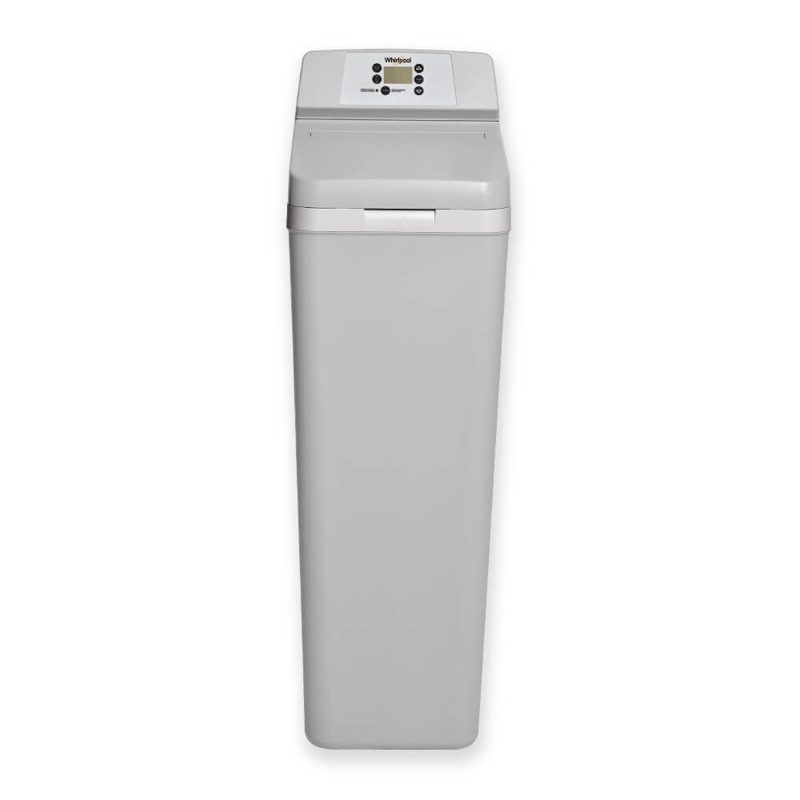
Above 5 mg/L dissolved iron, Penn State does not recommend a softener for iron. Some manuals go higher (WaterBoss 900 and Whirlpool WHES40E 10 ppm, Whirlpool WHES44 12).
Orange water or red particles mean the iron has already oxidized. It clogs softener resin, so filter it out before the softener (Penn State).
Under about 1 mg/L hydrogen sulfide: activated carbon (Penn State).
About 1 to 3 mg/L hydrogen sulfide: Penn State lists aeration up to about 2 mg/L and an oxidizing filter up to 2 to 3 mg/L.
3 to 6 mg/L falls between Penn State's ranges for oxidizing filters (up to 2 to 3 mg/L) and continuous chlorination (above 6). Ask the filter maker to confirm its sulfur limit for your level; SpringWell WS lists 8 ppm.
Above 6 mg/L hydrogen sulfide: continuous chlorination followed by filtration (Penn State).
A smell only in hot water often comes from the water heater's magnesium anode. Penn State suggests replacing it with an aluminum anode before buying treatment.
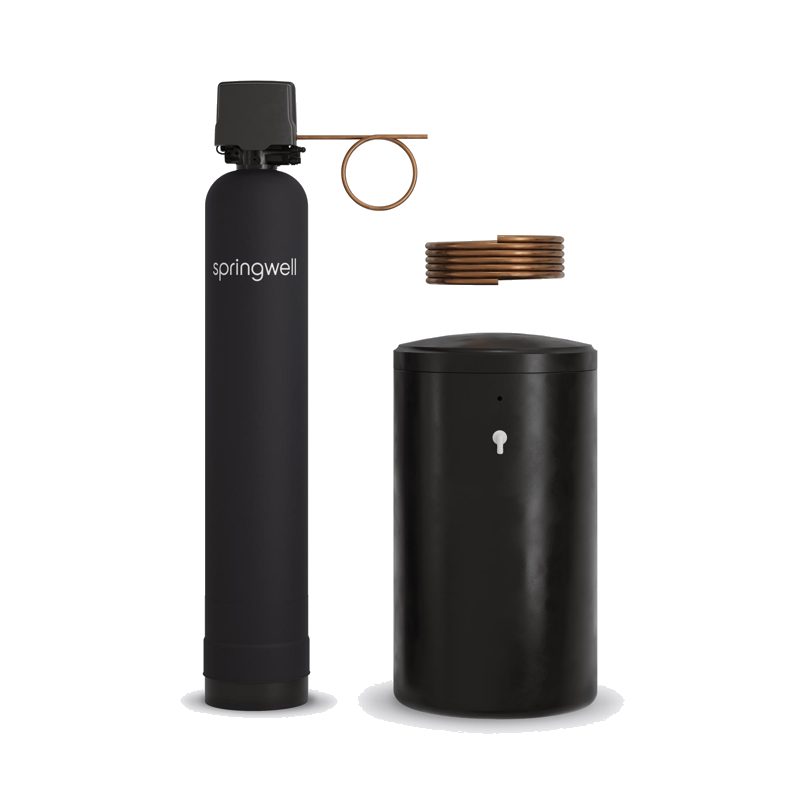
Salt-free conditioners need iron, manganese and sulfur removed first. SpringWell FutureSoft lists 0 ppm iron and manganese, Aquasana SimplySoft under 0.3 ppm iron, and Pelican's manual says to remove all iron, manganese and sulfur.
Aquasana SimplySoft is rated for hardness below 15 gpg. SpringWell FutureSoft lists up to 81 gpg and Pelican NaturSoft up to 75 gpg.
Aquasana SimplySoft is rated for pH below 8.3.
Below pH 7: under the minimum for the WaterBoss 900, SpringWell FutureSoft and Pelican NaturSoft. SpringWell's SS softener and WS iron filter list 6.5 to 10. Check the pH range of any product you consider.
Under 5 gpm is below the backwash minimum of even the smallest iron filter with a published minimum (SoftPro Iron Master 1.0 ft³ needs 5 gpm). Ask the maker for a filter sized to your pump.
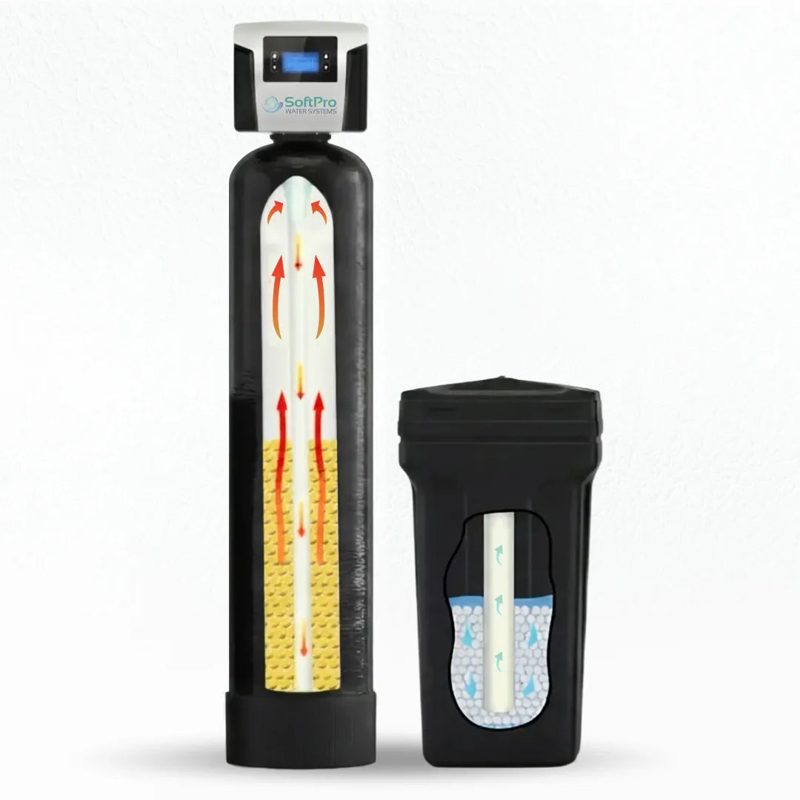
Backwashing filters need a minimum pump flow. SoftPro Iron Master needs 5, 7 and 10 gpm for its 1.0, 1.5 and 2.0 ft³ sizes, so choose a size your pump can backwash.
The Whirlpool WHES40E manual asks for at least 3 gpm of supply flow.
This covers nuisance parameters only. For health-related contaminants, test with a certified lab and choose equipment certified to the matching NSF/ANSI standard.
The best iron filter for well water by iron, manganese, sulfur and pH limits, plus the backwash flow each one needs from your well pump before you buy.
The best salt-free water softener is the one whose hardness, iron and pH limits fit your water. Four TAC systems compared, and when none of them will work.
Fleck 5600SXT reviews from spec sheets and owner forums: what the valve does, what the AFW 48k build adds, where it falls short and who should skip it.
Fleck 5600SXT settings step by step from Pentair's manual: the capacity to enter for your salt dose, hardness, reserve, regeneration time and brine fill.
Iron filter maintenance from the manuals: backwash schedules, media life by type, valve parts and a fault table for iron coming back or constant draining.
Salt-free water softener vs salt: what each does to hardness, scale, salt and drain water, iron limits and sodium, with every figure from a primary source.
Sulfur smell in well water: check whether the water heater or the well is the source, then match treatment to your hydrogen sulfide level with Penn State.
Water softener grain capacity is rated at maximum salt. See the makers' own salt tables, what 32,000 to 64,000 grains means in resin, and reserve settings.
The right water softener hardness setting: convert your test to gpg, add iron by your manual's factor, read the chart, then check the result with a strip.
Do salt-free water softeners work? They cut scale but leave hardness in. What independent studies measured, each maker's limits, and when salt is better.
Iron filter vs water softener: match your well test to one or both with Penn State ranges and softener manual iron limits, plus the right install order.
Well water test results explained: read the hardness, iron, manganese, sulfur and pH lines, see which are high and the equipment each number points to.
What it costs to run a water softener per year: salt, regeneration water and dollars from your hardness, household and salt setting, every figure sourced.
Find what size water softener you need: enter your household, hardness and iron to get the resin volume and grain rating at your salt setting. All sourced.
· 7 min read→
How we rank without pretending we tested.
0
hands-on testing claims. We say plainly what we did and didn't do.
72
sources linked across our guides: manuals, studies and extension services.
18
guides, each with its method on the page. How we work
 Grain & Gallon