 Grain & Gallon
Salt-free vs salt water softener: what changes in your home
Salt-free water softener vs salt: what each does to hardness, scale, salt and drain water, iron limits and sodium, with every figure from a primary source.
Our picks at a glance
- Salt-based, well water with iron
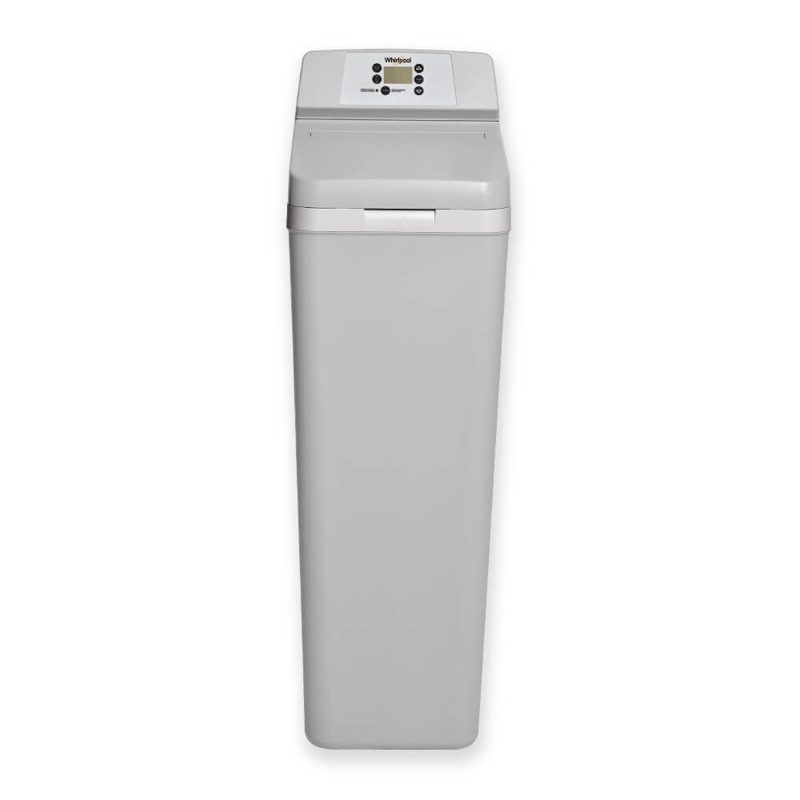
Most private wells with moderate hardness and clear-water iron up to 10 ppm
- Resin
- 1.14 ft³
- Rated flow
- 8.5 gpm
- Max clear-water iron
- 10 ppm
See where to buy (opens Whirlpool site)Opens whirlpoolwatersolutions.com - Salt-based, high flow
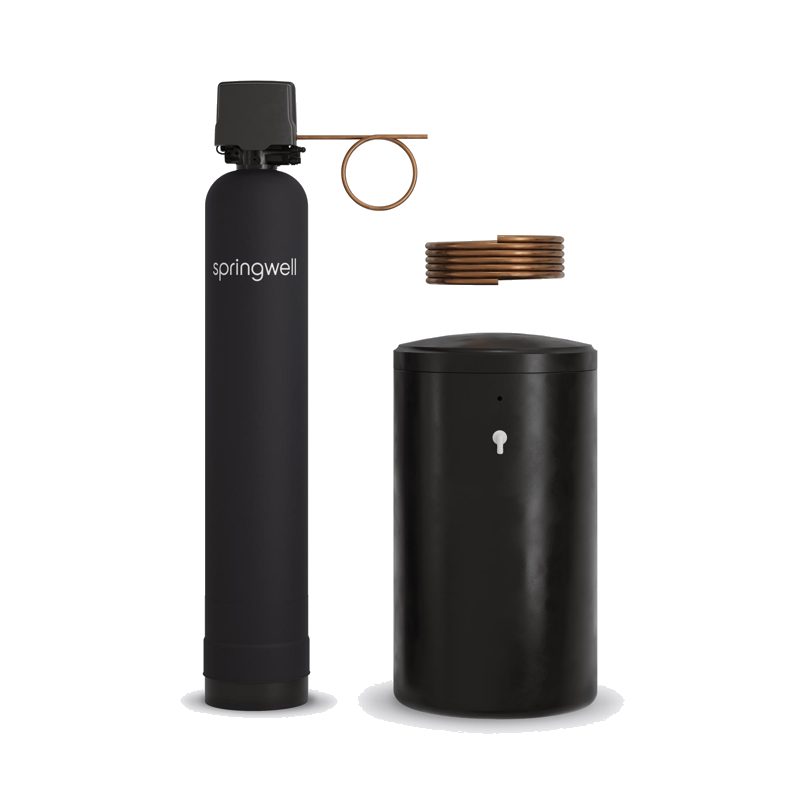
SpringWell SS salt-based softener
Homes with many bathrooms that need high flow
- Salt-free, hard city water
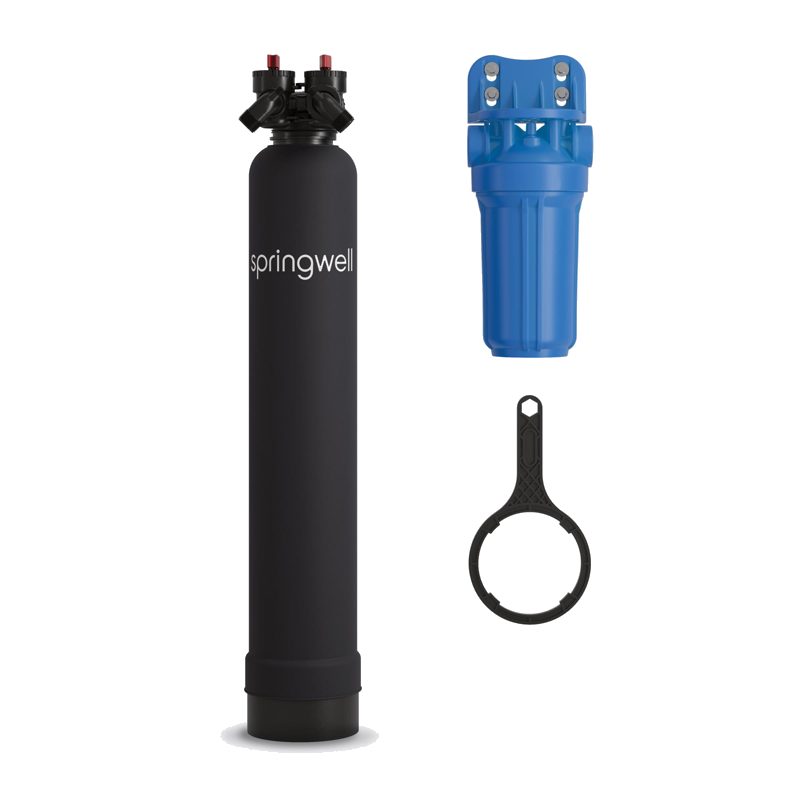
SpringWell FutureSoft salt-free conditioner
City water with no iron, where you want scale control without salt or a drain line
- Max hardness
- 81 gpg
- Max free chlorine
- 3 ppm
- Salt-free, moderate city water
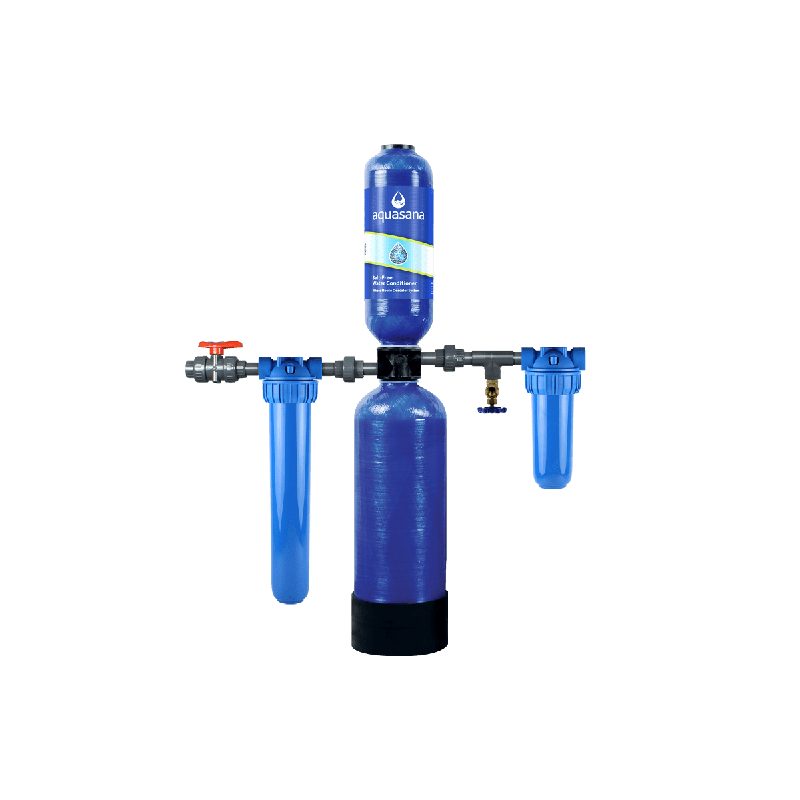
Aquasana SimplySoft salt-free conditioner
City water under 15 gpg with no iron problem
Salt-free water softener vs salt comes down to one question: do you want the hardness gone, or only less scale? Get a salt water softener if you want truly soft water (better lather, less soap film and spotting) or your well has clear-water iron within a softener’s limits. Get a salt-free water softener, more accurately a conditioner, if you only want less scale in your water heater and pipes, you’re on city water with no iron, and you can’t or won’t handle salt bags and a drain line. The salt-free kind leaves hardness in the water, so on a test strip nothing changes.
| Whirlpool WHES40E | SpringWell SS salt-based softener | SpringWell FutureSoft salt-free conditioner | Aquasana SimplySoft salt-free conditioner | |
|---|---|---|---|---|
| Best for | Most private wells with moderate hardness and clear-water iron up to 10 ppm | Homes with many bathrooms that need high flow | City water with no iron, where you want scale control without salt or a drain line | City water under 15 gpg with no iron problem |
| Capacity | 11,900 grains at 2.4 lb, 31,600 at 9.0 lb, 40,000 at 15.5 lb | n/a | n/a | n/a |
| Resin | 1.14 ft³ | n/a | n/a | n/a |
| Rated flow | 8.5 gpm (11 psi drop) | n/a | n/a | n/a |
| Max clear-water iron | 10 ppm | n/a | n/a | n/a |
| Max hardness | 125 gpg | n/a | 81 gpg | Below 15 gpg |
| Min supply flow | 3 gpm | n/a | n/a | n/a |
| Water per regeneration | 37.1 gal at maximum salt | n/a | n/a | n/a |
| Iron rule in manual | Add 5 grains per 1 ppm ferrous iron | n/a | n/a | n/a |
| Source | Whirlpool WHES40/WHES44 owner's manual | SpringWell product page | SpringWell product page | Aquasana product page |
| Sizes | n/a | SS1 32k (9x48 tank), SS4 48k (10x54), SS+ 80k (13x54) | FS1 (1 to 3 bathrooms), FS4 (4 to 6), FS+ (7+) | n/a |
| Flow | n/a | 11, 13 or 20 gpm by size | 12, 15 or 20 gpm | 7.0 gpm rated, 15.3 gpm peak |
| Household | n/a | 1 to 3, 4 to 6, or 7+ bathrooms | n/a | n/a |
| pH range | n/a | 6.5 to 10 | 7.0 to 9.5 | n/a |
| Pressure | n/a | 25 to 80 psi | n/a | n/a |
| Max iron | n/a | Not published | n/a | Under 0.3 ppm |
| Max iron / manganese | n/a | n/a | 0 ppm / 0 ppm | n/a |
| Max free chlorine | n/a | n/a | 3 ppm | n/a |
| Alkalinity | n/a | n/a | n/a | Under 250 mg/L |
| pH | n/a | n/a | n/a | Below 8.3 |
| Rated life | n/a | n/a | n/a | 10 years or 1,000,000 gallons |
| Water temperature | n/a | n/a | n/a | 40 to 90°F |
| See where to buy (opens Whirlpool site) | Check price atSpringWell (opens partner site) | Check price atSpringWell (opens partner site) | Check price atAquasana (opens partner site) |
The picks are two salt-based units and two salt-free ones from different brands, chosen because their makers publish the limits you need to check. Here are the measurable differences side by side, with the source for each:
| Salt water softener | Salt-free conditioner | |
|---|---|---|
| Hardness after treatment | Removed (calcium and magnesium swapped for sodium) | Unchanged; SpringWell says it “conditions” hardness, Aquasana says it doesn’t reduce it |
| Scale in water heaters | Hardness is gone, so hardness scale can’t form | More than 88% less in one independent lab study (TAC media) |
| Soap and spots | Soft water lathers; less film and curd | Pentair’s manual: bar soap still curds, spots “more visible” than with softened water |
| Salt | About 12 bags of 40 lb a year (4 people, 15 gpg, efficient setting) | None |
| Drain water | About 50 gal per regeneration (Penn State); 37.1 gal for the Whirlpool | None: “no drain, no backwash cycle” (SpringWell) |
| Iron allowed | Whirlpool manual: up to 10 ppm clear-water iron | SpringWell: 0 ppm; Aquasana: under 0.3 ppm |
| Sodium added | 7.5 mg per quart for each gpg removed (Penn State) | None |
| Ongoing supplies | Salt, refilled as it’s used | Replacement media: 5+ years (SpringWell), 10 years or 1,000,000 gal (Aquasana) |
What each one does to hardness
A salt softener is an ion-exchange tank. Resin beads trade the calcium and magnesium in your water for sodium, and when the beads are full the valve flushes them with brine from the salt tank. Water leaving a working softener tests near zero hardness. The USGS calls water soft at 0 to 60 mg/L (about 3.5 gpg), and ion exchange is the only whole-house option that gets you there.
A salt-free conditioner does something else. The common type, template-assisted crystallization (TAC), turns dissolved hardness into tiny crystals that ride through the plumbing instead of sticking to hot surfaces. The calcium and magnesium stay in the water. SpringWell’s own page says the FutureSoft prevents “up to 95% of scale buildup by conditioning hard water minerals” and that salt-based systems are what give “genuine soft water”. Aquasana states outright that the SimplySoft doesn’t reduce hardness or TDS.
That’s why “water softener vs water conditioner” isn’t a naming quirk. If a salt-free unit is working, your hardness test will read about the same before and after it.
Scale on water heaters and fixtures
Both types cut scale in the water heater, but for different reasons and with different evidence. A softener removes the minerals that form it. Penn State Extension notes that hard water scale builds up on water heaters and shortens their life, which is the main thing a softener prevents.
For salt-free, the best independent data is the 2014 WateReuse study led at Arizona State University: TAC media cut scale in small lab heaters by more than 88%, against about 50% for two electrical devices. It didn’t test spots on glass and faucets, it ran for about 3 weeks, and its hardest water was about 29 gpg. Our guide to whether salt-free water softeners work has the full results and a second study that found smaller effects.
On fixtures, the difference is plainer. Pentair’s NaturSoft manual tells owners switching from a salt softener that water spots are more visible, bar soap still forms a sticky curd and there is no slick feel. If spotless shower glass is the goal, only removing the hardness deals with the cause.
Salt, water and running cost
This is where salt-free wins clearly. A salt softener’s running cost is almost all salt, plus the water each regeneration sends to the drain. Using our running cost calculator’s defaults, a household of 4 on 15 gpg water with 1.5 ft³ of resin at the efficient 6 lb salt setting uses about 470 lb of salt (12 bags of 40 lb) and 2,600 gallons of regeneration water a year. At the maximum 15 lb setting that rises to about 20 bags. Our water softener running cost calculator works it out from your own hardness, household and salt price.
Regeneration water varies by model. Penn State gives about 50 gallons per regeneration as a general figure, while the Whirlpool WHES40E manual lists 37.1 gallons at its maximum salt dose. A softener also needs a drain near the install spot and, for most models, a power outlet for the control valve.
A TAC conditioner uses no salt, no power and no drain water. SpringWell sums it up as “no salt, no drain, no backwash cycle”. The cost you trade for that is media replacement: SpringWell lists a 5+ year media life for the FutureSoft, and Aquasana rates the SimplySoft at 10 years or 1,000,000 gallons. Carrying salt bags is also a real cost for some households, and it disappears too.
Iron, manganese, pH and hardness limits
The makers’ own limits often decide this comparison before anything else does. Salt softeners tolerate more of what’s in well water. Salt-free media wants clean water.
- Iron and manganese. The Whirlpool WHES40E manual rates it for up to 10 ppm clear-water iron and asks you to add 5 grains of hardness per 1 ppm to the setting. SpringWell doesn’t publish an iron limit for the SS. On the salt-free side, SpringWell lists 0 ppm iron and 0 ppm manganese for the FutureSoft, and Aquasana allows under 0.3 ppm iron.
- Oxidized (red) iron. Penn State warns that red iron clogs softener resin and should be filtered out before the softener. Salt-free media can’t take it either.
- Hardness. Whirlpool lists 125 gpg maximum. FutureSoft is rated to 81 gpg, and SimplySoft only below 15 gpg, so the Aquasana is out of range for very hard water.
- pH. SpringWell gives 6.5 to 10 for the SS and 7.0 to 9.5 for the FutureSoft. Aquasana wants pH below 8.3. Slightly acidic well water under pH 7 falls outside both salt-free units.
If you haven’t had your water tested, do that first. Our guide to reading well water test results shows which numbers to check against the lists above, and the water softener size calculator turns hardness and iron into a resin size if salt wins.
Sodium and septic questions
A salt softener adds sodium to your water in proportion to the hardness it removes. Penn State gives the figure as 7.5 milligrams per quart for each gpg removed, so water at 15 gpg picks up about 110 milligrams per quart. Whether that matters for you is a question for your doctor. NDSU and Nebraska Extension mention potassium chloride as the salt alternative for homes that want to limit added sodium, at a higher running cost. Salt-free conditioners add no sodium.
On septic, Penn State says only that septic owners should consider the extra load that backwashing and regeneration water puts on the drain field. A salt-free unit sends nothing to the drain, so the question doesn’t arise.
Salt vs salt-free water softener pros and cons
Salt-free water softener pros: no salt to carry, no drain line or regeneration water, no added sodium, no power for TAC tanks, and measured scale reduction in water heaters. Cons: hardness stays in, so soap and spots behave much as before; strict iron, manganese and pH limits; and only one strong independent study behind the scale figure.
Salt water softener pros: real soft water, tolerance for clear-water iron (10 ppm in the Whirlpool manual) and a wide hardness range. Cons: a yearly salt bill, about 37 to 50 gallons of drain water per regeneration, added sodium, and brine going to your drain or septic system.
Who should get neither
Some homes need something before, or instead of, either system:
- Wells with red iron, high iron or sulfur smell. Neither a salt-free unit nor a softener should see oxidized iron or hydrogen sulfide. Filter first. Our iron filter vs water softener guide matches iron, manganese and sulfur levels to the right equipment and install order.
- Water that’s already soft. Penn State’s hardness table calls water under 1 gpg soft. There’s nothing for either system to do.
- Health worries. Neither type treats bacteria, nitrate, arsenic or lead. For health-related contaminants, test with a certified lab and choose equipment certified to the matching NSF/ANSI standard.
If salt looks right for your well, our comparison of the best water softeners for well water sets each model’s published iron, hardness and flow limits side by side. If salt-free fits, our roundup of the best salt-free water softeners compares what each system asks of your water, and the salt-free softeners section has the rest of the cluster.
Questions people ask
Is a water conditioner the same as a water softener?
No. A water softener removes calcium and magnesium by ion exchange, so a hardness test after it reads close to zero. "Conditioner" is the name sellers use for salt-free systems that leave the hardness in and only change how it forms scale.
Will a salt-free water softener make water feel soft?
No. The slick feel comes from removing calcium and magnesium, and a salt-free unit leaves them in. Pentair's own NaturSoft manual says bar soap still forms a sticky curd and there is no slick feel.
Which costs less to run, salt or salt-free?
Salt-free, in day-to-day terms. It uses no salt and sends no water to the drain, while a salt softener for 4 people on 15 gpg water uses about 12 bags of 40 lb salt and 2,600 gallons of regeneration water a year at the efficient setting. The salt-free media still needs replacing when it reaches its rated life.