 Grain & Gallon
Best salt-free water softeners, compared by their published limits
The best salt-free water softener is the one whose hardness, iron and pH limits fit your water. Four TAC systems compared, and when none of them will work.
Our picks at a glance
- Best overall salt-free system
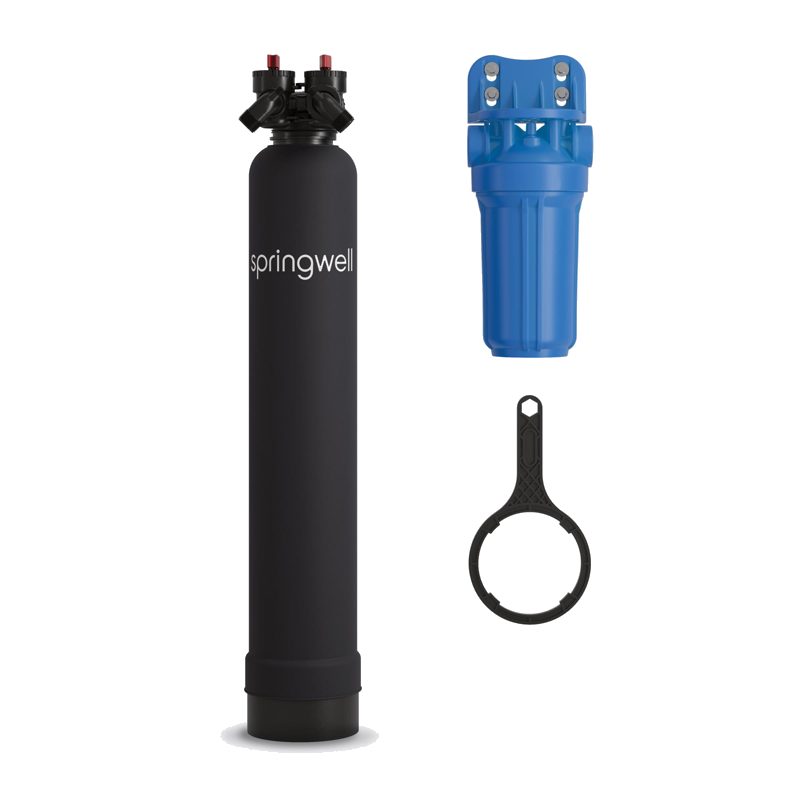
SpringWell FutureSoft salt-free conditioner
City water with no iron, where you want scale control without salt or a drain line
- Max hardness
- 81 gpg
- Max free chlorine
- 3 ppm
Check price atSpringWell (opens partner site)Opens springwellwater.com - Best for high pH city water
City water with high pH or hard water up to 75 gpg
- Max hardness
- 75 gpg
- Best with rebeddable media
Pre-treated or city water where you want to rebed the media later
- Best for moderately hard city water
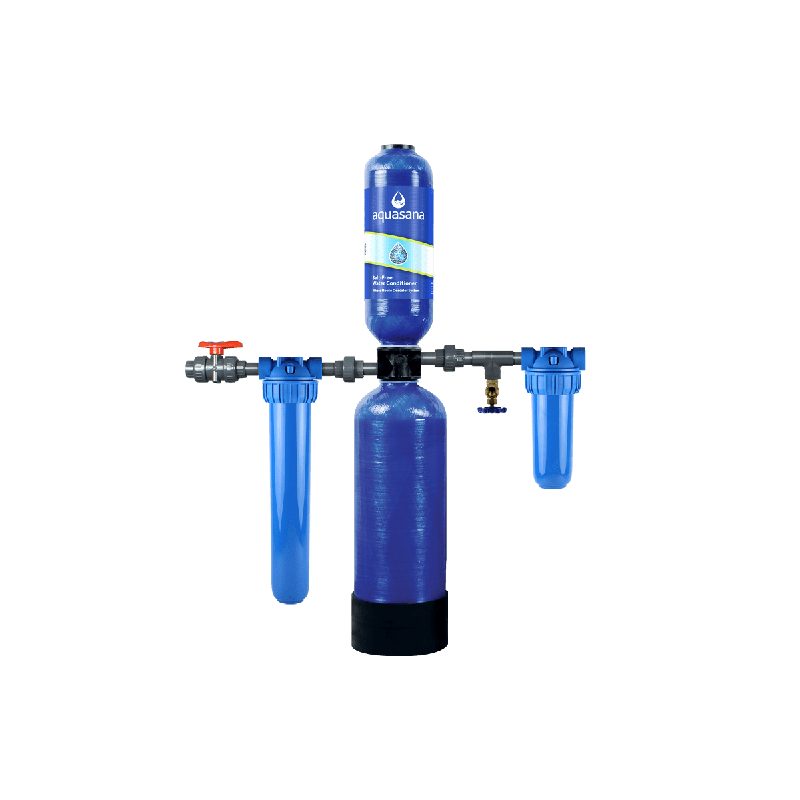
Aquasana SimplySoft salt-free conditioner
City water under 15 gpg with no iron problem
For most city homes, the SpringWell FutureSoft is the best salt-free water softener: it publishes the widest hardness limit of the systems we compared (81 gpg), a pH range of 7.0 to 9.5 and flows of 12 to 20 gpm. If your water is under 15 gpg, the Aquasana SimplySoft has the longest rated media life. On a well with any iron, manganese or sulfur, none of these will work until those are filtered out, and none of them softens water: they cut scale while the calcium and magnesium stay in.
The four picks below are ranked by how well their published limits fit the water most buyers have. If you’re still deciding whether salt-free makes sense at all, read whether salt-free water softeners work first. It covers the research in more depth than this page does.
How we chose
Most salt-free water softener reviews rank systems by brand or by marketing percentages. We ranked them by the numbers you have to match against your own water test: maximum hardness, iron, manganese, hydrogen sulfide, chlorine and pH, then flow and media life. Every figure comes from the maker’s product page or manual, or a dealer page where the maker’s page is gone. Where none of them gives a number, the tables say so.
We haven’t installed these units. This is research from manufacturer documents and independent studies, and the about page explains the method. Our criteria, in order:
- Media-based scale control only. Template-assisted crystallization (TAC) tanks, or the maker’s equivalent media, are the only salt-free type with a strong independent lab result behind them. Electronic descalers are covered under what we left out.
- How much the maker publishes. A system with a full list of limits ranks above one that leaves hardness or pH blank, because you can check it before you buy.
- Flow and media life. Enough flow for your bathrooms, and a stated media life you can plan around.
- Sold new, with a buy path. Every pick was confirmed as orderable new on 2026-09-27.
The evidence base is WateReuse Research Foundation project 08-06, led at Arizona State University. In roughly three weeks of heater tests, a TAC unit cut scale by 89% to 97% against untreated water, while two electrical devices managed roughly 43% to 51% (report summary). The hardest water tested was about 29 gpg. A 2019 University of Waterloo thesis found much smaller effects, so read any “up to 95%” on a product page as the maker’s claim. Neither SpringWell nor Aquasana names a certification body on its page.
Our picks for the best salt-free water softener
SpringWell FutureSoft salt-free conditioner
A salt-free scale-control system with a high hardness limit (81 gpg) that needs water with no iron or manganese at all.
Best for City water with no iron, where you want scale control without salt or a drain line
- Max hardness
- 81gpg
- Max free chlorine
- 3ppm
What we like
- Rated for hardness up to 81 gpg
- 12, 15 or 20 gpm flow by size
- No salt and no regeneration water
Watch out for
- Needs 0 ppm iron and 0 ppm manganese, which rules out most untreated wells
- Doesn't remove hardness; it's rated to prevent up to 95% of scale buildup
- Minimum pH of 7.0
All specs
- Sizes
- FS1 (1 to 3 bathrooms), FS4 (4 to 6), FS+ (7+)
- Flow
- 12, 15 or 20 gpm
- Max iron / manganese
- 0 ppm / 0 ppm
- pH range
- 7.0 to 9.5
- Source
- SpringWell product page
Photo: SpringWell Water
The FutureSoft earns the top spot because its spec table is the most complete of the four and its hardness ceiling is the highest. It comes in three sizes by bathroom count: FS1 at 12 gpm for 1 to 3 bathrooms, FS4 at 15 gpm for 4 to 6, and FS+ at 20 gpm for 7 or more. A 5-micron sediment pre-filter is included, and it’s the only system here that publishes a free chlorine limit (3 ppm), which matters on chlorinated city water.
The downside is how clean the water has to be. SpringWell lists 0 ppm for iron, manganese, copper, hydrogen sulfide and oil, and a minimum pH of 7.0, so acidic or iron-bearing well water is out without treatment in front. The 81 gpg rating also sits far above the roughly 29 gpg the independent study covered. Media life is listed as “5+ year”, shorter than Aquasana’s rating.
Pelican NaturSoft NS3 / NS6
A salt-free conditioner whose Pentair manual publishes the highest pH ceiling we found (11) and a 75 gpg hardness limit, in two sizes rated 10 and 15 gpm.
Best for City water with high pH or hard water up to 75 gpg
- Max hardness
- 75gpg
What we like
- pH range of 7 to 11 in Pentair's manual
- Max hardness of 75 gpg (1,282 ppm)
- Limits come from the maker's manual, not a sales page
Watch out for
- All iron, manganese, sulfur and tannins must be removed first
- Pentair's product page is gone; sold new through dealers
- Controls scale; it does not remove hardness
All specs
- Sizes
- NS3, NS6
- Flow
- 10 or 15 gpm by size
- pH range
- 7 to 11
- Pre-treatment
- Remove all iron, manganese, sulfur and tannins
- Source
- Pentair Pelican NaturSoft NS3/NS6 manual
Pentair’s NaturSoft manual gives a pH range of 7 to 11, the widest of any system here, and a 75 gpg hardness limit. The NS3 is rated 10 gpm and the NS6 15 gpm. The manual is also unusually honest: it tells owners coming from a salt softener that water spots are more visible, bar soap still forms a sticky curd, and old scale may break loose as silt in the first few weeks.
It asks a lot of your water, though. All iron, manganese, sulfur and tannins should be removed first, phosphates kept under 1 mg/L and copper under 1.3 mg/L. Buying is also less direct than it used to be. Pentair’s product page now redirects to a general page and the old Pelican site no longer loads, but dealers still sell both sizes new: Healthier Elements listed the NS3 and NS6 in stock on 2026-09-27. That dealer gives no media life figure beyond “depends on water quality”, so ask who supplies replacement media before you order.
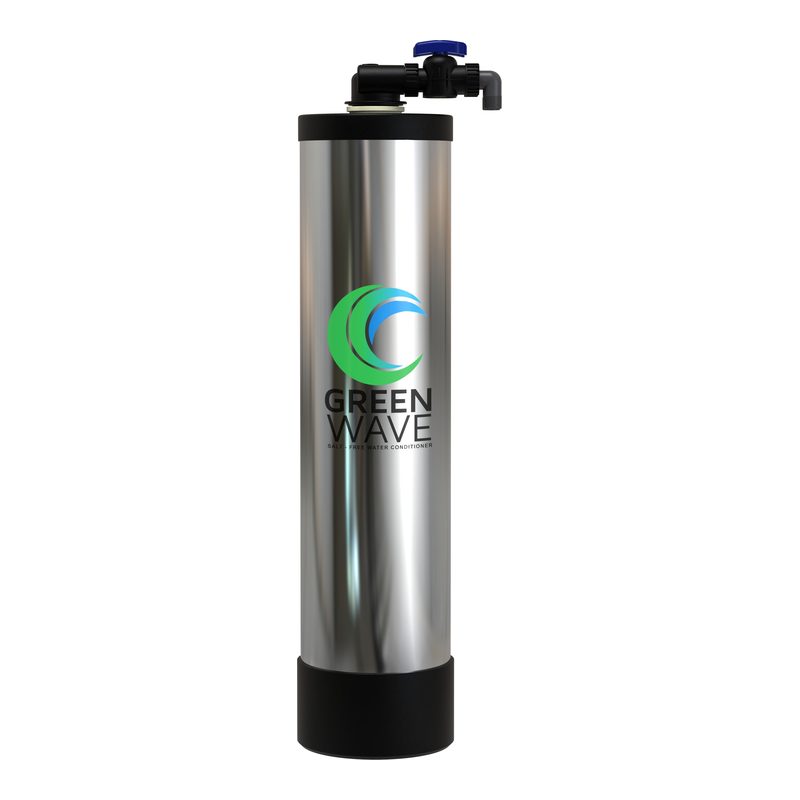
US Water Systems GreenWave
A TAC salt-free conditioner with Next ScaleStop media in 10, 15 and 20 gpm sizes, and one of the few whose media the seller says can be rebedded rather than replacing the system.
Best for Pre-treated or city water where you want to rebed the media later
What we like
- Three sizes: 10, 15 or 20 gpm
- Media can be rebedded (seller)
- Seller estimates 4 to 6 years or 500,000 to 600,000 gallons per media fill
Watch out for
- Max hardness and pH are not published
- Well users must pre-treat iron, manganese, hydrogen sulfide and copper
- Shorter stated media life than Aquasana's 10 years
- Rebed kit uses Filtersorb SP3 media, not the Next ScaleStop it ships with
All specs
- Flow
- 10, 15 or 20 gpm by size
- Media
- Next ScaleStop (TAC)
- Media life (seller estimate)
- 4 to 6 years
- Water per media fill (seller estimate)
- 500,000 to 600,000 gal
- Max hardness
- Not published
- pH range
- Not published
- Pre-treatment on wells
- Iron, manganese, hydrogen sulfide and copper
- Source
- US Water Systems product page
Photo: US Water Systems
GreenWave uses Next ScaleStop TAC media, the same media named for the TAC unit in the WateReuse study. US Water Systems sells it in 10, 15 and 20 gpm sizes and, per its product page, estimates 4 to 6 years or 500,000 to 600,000 gallons per media fill. When the media is spent, you buy a rebed kit instead of a new system. Note that the kit US Water Systems lists contains Filtersorb SP3, a different TAC-type media from the Next ScaleStop the study tested. It uses no electricity and sends no water to drain.
The weak spot is what the page leaves out: no maximum hardness, no pH range and no chlorine limit. If your water is above about 29 gpg, get the hardness limit in writing before you order. Well owners also have to pre-treat iron, manganese, hydrogen sulfide and copper, per the same page.
Aquasana SimplySoft salt-free conditioner
A salt-free conditioner for moderately hard water, with published limits for hardness, iron, alkalinity and pH and a rated life of 10 years or 1,000,000 gallons.
Best for City water under 15 gpg with no iron problem
What we like
- Rated life of 10 years or 1,000,000 gallons
- Publishes limits for hardness, iron, alkalinity and pH
- 7.0 gpm rated, 15.3 gpm peak
Watch out for
- Only for hardness below 15 gpg
- Iron must be under 0.3 ppm and pH below 8.3
- Doesn't reduce hardness or TDS, per Aquasana
All specs
- Flow
- 7.0 gpm rated, 15.3 gpm peak
- Max hardness
- Below 15 gpg
- Max iron
- Under 0.3 ppm
- Alkalinity
- Under 250 mg/L
- pH
- Below 8.3
- Rated life
- 10 years or 1,000,000 gallons
- Water temperature
- 40 to 90°F
- Source
- Aquasana product page
Photo: Aquasana
Aquasana is the most direct of the four about what its system does: the product page says it does not reduce hardness or TDS. Its limits are clear, and its rated life of 10 years or 1,000,000 gallons is the longest here. The package lists a 20-inch pre-filter and a post-filter.
It ranks fourth because its window is narrow, not because it’s worse inside that window. Hardness must be below 15 gpg, iron under 0.3 ppm, alkalinity under 250 mg/L and pH below 8.3. Some city water runs above that pH, so check your utility’s report. Its 7.0 gpm rated flow (15.3 gpm peak) is also the lowest of the four, which can pinch a house running two showers and a washer at once.
Published limits side by side
These are each maker’s own numbers. “Not published” means the maker’s page or manual gives none. “Not listed” means no figure appears in the page, manual or dealer listing we used.
| System | Max hardness | Iron | Manganese | Hydrogen sulfide | Free chlorine | pH | Flow | Media life |
|---|---|---|---|---|---|---|---|---|
| SpringWell FutureSoft | 81 gpg | 0 ppm | 0 ppm | 0 ppm | 3 ppm max | 7.0 to 9.5 | 12, 15 or 20 gpm | 5+ years |
| Pelican NaturSoft | 75 gpg | Remove all | Remove all | Remove all sulfur | Not listed | 7 to 11 | 10 or 15 gpm | Depends on water (dealer) |
| US Water GreenWave | Not published | Pre-treat on wells | Pre-treat on wells | Pre-treat on wells | Not published | Not published | 10, 15 or 20 gpm | 4 to 6 years |
| Aquasana SimplySoft | Below 15 gpg | Under 0.3 ppm | Not listed | Not listed | Not listed | Below 8.3 | 7.0 gpm (15.3 peak) | 10 years or 1,000,000 gal |
The install limits differ too:
| System | Temperature | Pressure | Other limits | Filter included |
|---|---|---|---|---|
| SpringWell FutureSoft | 34 to 120°F | 20 to 80 psi | Copper 0 ppm, oil 0 ppm | 5-micron sediment |
| Pelican NaturSoft | 36 to 120°F (dealer) | 25 to 80 psi (dealer) | Tannins removed; phosphates under 1 mg/L; copper under 1.3 mg/L | Sediment pre-filter (dealer) |
| US Water GreenWave | Not published | Not published | Copper pre-treated on wells | Not listed |
| Aquasana SimplySoft | 40 to 90°F | 100 psi max | Alkalinity under 250 mg/L | Pre-filter and post-filter |
Three things stand out. None of these systems tolerates meaningful iron, so the iron number on your test decides more than the brand does. Above about 29 gpg, the only evidence you have is the maker’s rating. And the media life figures are seller estimates: the TAC unit in the WateReuse study came with a recommended media change every 12 to 18 months, far shorter than any rating above.
Salt-free on well water: what has to go first
A salt-free water softener for well water only works on a well that looks like city water by the time it reaches the tank. SpringWell, Pelican and US Water Systems want iron, manganese and hydrogen sulfide removed, Aquasana caps iron at 0.3 ppm, and SpringWell and Pelican set a pH floor of 7.0. On a typical well with some iron, that means two systems: an iron and sulfur filter first, then the conditioner.
Start with a recent lab test. Our guide to reading your well water test results shows which numbers matter. Then use the matcher below with “Considering a salt-free conditioner” set to Yes: it flags each published limit your water breaks.
Which treatment does my water need?
Enter the numbers from your water test. Each note that appears is a rule from Penn State Extension, NDSU, EPA or a manufacturer's published limit. It covers hardness, iron, manganese, sulfur smell and pH only.
Iron plus manganese
ppm
- Compensated hardness (5 gpg per ppm iron)
- gpg
- Hardness in mg/L
- mg/L
- Under 1 gpg counts as soft (Penn State, NDSU). You do not need a softener for hardness.
- Iron above 0.3 mg/L stains fixtures and laundry. That is EPA's secondary (aesthetic) standard, not a health limit.
- Manganese above 0.05 mg/L causes black or brown staining. That is EPA's secondary (aesthetic) standard.
- A softener can take this iron: dissolved iron under 5 mg/L with hardness of 3 to 20 gpg and pH above 6.7 (Penn State). Set the iron factor from your manual.
- If you don't want to soften, Penn State lists polyphosphate feed for iron under 2 mg/L (it keeps iron from staining but doesn't remove it) and catalytic carbon for iron under 1 mg/L.
- Iron plus manganese of 3 to 10 mg/L: Penn State lists an oxidizing filter (greensand, Katalox-type media or air injection). Put it before any softener.
- Over 10 mg/L combined: oxidation, such as chlorination, followed by filtration (Penn State). NDSU says over 10 ppm may need a dedicated iron removal system.
- Above 5 mg/L dissolved iron, Penn State does not recommend a softener for iron. Some manuals go higher (WaterBoss 900 and Whirlpool WHES40E 10 ppm, Whirlpool WHES44 12).
- Orange water or red particles mean the iron has already oxidized. It clogs softener resin, so filter it out before the softener (Penn State).
- Under about 1 mg/L hydrogen sulfide: activated carbon (Penn State).
- About 1 to 3 mg/L hydrogen sulfide: Penn State lists aeration up to about 2 mg/L and an oxidizing filter up to 2 to 3 mg/L.
- 3 to 6 mg/L falls between Penn State's ranges for oxidizing filters (up to 2 to 3 mg/L) and continuous chlorination (above 6). Ask the filter maker to confirm its sulfur limit for your level; SpringWell WS lists 8 ppm.
- Above 6 mg/L hydrogen sulfide: continuous chlorination followed by filtration (Penn State).
- A smell only in hot water often comes from the water heater's magnesium anode. Penn State suggests replacing it with an aluminum anode before buying treatment.
- Salt-free conditioners need iron, manganese and sulfur removed first. SpringWell FutureSoft lists 0 ppm iron and manganese, Aquasana SimplySoft under 0.3 ppm iron, and Pelican's manual says to remove all iron, manganese and sulfur.
- Aquasana SimplySoft is rated for hardness below 15 gpg. SpringWell FutureSoft lists up to 81 gpg and Pelican NaturSoft up to 75 gpg.
- Aquasana SimplySoft is rated for pH below 8.3.
- Below pH 7: under the minimum for the WaterBoss 900, SpringWell FutureSoft and Pelican NaturSoft. SpringWell's SS softener and WS iron filter list 6.5 to 10. Check the pH range of any product you consider.
- Under 5 gpm is below the backwash minimum of even the smallest iron filter with a published minimum (SoftPro Iron Master 1.0 ft³ needs 5 gpm). Ask the maker for a filter sized to your pump.
- Backwashing filters need a minimum pump flow. SoftPro Iron Master needs 5, 7 and 10 gpm for its 1.0, 1.5 and 2.0 ft³ sizes, so choose a size your pump can backwash.
- The Whirlpool WHES40E manual asks for at least 3 gpm of supply flow.
- This covers nuisance parameters only. For health-related contaminants, test with a certified lab and choose equipment certified to the matching NSF/ANSI standard.
How this works: Each note is one rule from a published source: Penn State Extension (water softening; iron and manganese; hydrogen sulfide), NDSU WQ1031, EPA secondary standards (aesthetic, not health) and manufacturer limits for SpringWell, Aquasana, Pelican, WaterBoss, Whirlpool and SoftPro. Sources disagree on iron: dealers often set 2 ppm, Penn State says under 5 mg/L for softening, and softener manuals rate 10 to 12 ppm. Compensated hardness uses 5 gpg per ppm iron, the factor in the Whirlpool and WaterBoss manuals. mg/L of hardness is gpg times 17.1.
If the matcher says you need iron treatment, our iron filter vs water softener guide explains the options and install order, and our roundup of the best iron filters for well water compares the filters themselves. At that point a salt softener is often simpler, because some models handle clear-water iron within their own rated limit. Our best water softeners for well water compares those limits model by model.
Which one should you get?
Pick by your water first, then by the brand. This table assumes you’ve checked hardness, iron and pH on a recent test or your utility’s report.
| Your water | Best fit | Why |
|---|---|---|
| City water under 15 gpg, pH under 8.3 | Aquasana SimplySoft | Clear limits, longest rated media life |
| City water 15 to 29 gpg | SpringWell FutureSoft | Widest published limits, inside the range the independent study covered |
| City water over 29 gpg | SpringWell FutureSoft or Pelican NaturSoft, or a salt softener | Only the makers’ own ratings exist at this hardness |
| pH above 9.5 | Pelican NaturSoft | The only system here rated to pH 11 |
| You want to rebed the tank later | US Water GreenWave | Rebed kits sold separately; ask for its hardness limit first |
| Well with any iron, manganese or sulfur | Iron and sulfur filter first, or a salt softener | Three makers require them removed; Aquasana caps iron at 0.3 ppm |
| You want soft water: no spots, slick feel | A salt softener | None of these removes calcium or magnesium |
For the best salt-free water softener system for home use in a bigger house, match flow to bathrooms: FutureSoft and GreenWave both go to 20 gpm, while the SimplySoft is rated 7.0 gpm. If you’re comparing against a salt softener, our softener running cost calculator shows what the salt and regeneration water would cost you each year, and the softener size calculator tells you what capacity to shop for.
What we left out and why
- Electronic and magnetic descalers, such as the iSpring ED2000. These clamp a coil around the pipe and have no media tank. In the WateReuse tests, the two electrical devices cut scale by roughly half, against 89% to 97% for TAC. iSpring rates the ED2000 to 25 gpg and wants iron above 0.3 ppm pre-filtered. It’s easier to fit, but the evidence is weaker, so it isn’t a pick here.
- Chelation and phosphate cartridges. They release a chemical that gets used up, so the cartridge needs regular replacement, and the WateReuse study left them out of its testing.
- Dealer-only systems. Without a public spec sheet we can’t compare the limits, and there’s no buy path to link. If a dealer quotes you one, ask for every number in the tables above.
- Top rated listings with no published limits. Many salt-free conditioner reviews on marketplaces praise units that list no hardness, iron or pH limit at all. Without those, you can’t check fit before you buy.
Once you know your hardness, iron and pH, the tables above narrow this to one or two systems. If none fits, our salt-free vs salt water softener comparison sets the two types side by side, and the salt-free section explains when a salt softener is the better buy.
Questions people ask
Do salt-free water softeners need maintenance?
Very little. There's no salt, no regeneration and no drain line, and TAC tanks don't use electricity. You change the sediment pre-filter when it clogs and replace the media when it's spent, which the makers put at 4 to 6 years (GreenWave) up to 10 years or 1,000,000 gallons (Aquasana). The WateReuse study's TAC unit came with a media change every 12 to 18 months, so treat the long ratings as a best case.
Can a salt-free water softener be used with well water?
Only if the well has no iron, manganese or hydrogen sulfide, or those are filtered out first. SpringWell requires 0 ppm of each, Pentair's manual says to remove all of them before a NaturSoft, and Aquasana caps iron at 0.3 ppm.